
Franklin County Arrest Log Sources
The sheriff's office publishes no multi-day booking blotter, 72-hour list, or weekly arrest archive. Franklin County instead offers partial views. Each one answers a different question. The FCSO inmate search covers current custody only. The Municipal Court Clerk posts daily arraignment reports plus case search tools. Police and sheriff news pages highlight select incidents. Put together, they still miss people arrested across several days.
A careful date-range search combines these sources without blurring what each one means. A jail entry proves custody. An arraignment report shows a court date. A docket tracks the case after booking. A name missing from one place proves nothing about the others.
Read the Franklin County Blotter
Start with the date and the record type. Need someone still in custody? Use the FCSO current inmate search. A hearing after a fresh booking lives in the FCMC Daily Arraignment Reports. For older bookings or a full date range, ask FCSO Public Records directly.
- Write down the date range, full name, and arresting agency if known.
- Check current FCSO custody first, since a live entry may supply a case number and court date.
- Review each relevant daily arraignment report, keeping its courtroom legend in view.
- Use the Municipal Court or Common Pleas case search for charges, filings, and later disposition.
- Request the booking record or jail-register entry when the public views do not cover the date.
Want just the newest events instead of a multi-day span? The 24 Hour Arrests page explains the current-custody check and the processing lag behind it.
Franklin Arrest Log Field Meanings
With no single county blotter, every field depends on its source. An arraignment value never belongs on a booking timeline without checking what it means. These distinctions keep a multi-day arrest review accurate.
| Item | Meaning and source limit |
|---|---|
| Name and identifiers | Match the person with a booking, inmate, SID, case, or ticket number when available. |
| Booking date and time | Administrative intake, not necessarily the time of the police encounter. Confirm through the booking or arrest record. |
| Charge | An charge at booking or a charge filed in court. Later entries may amend it. |
| Custody location | A current FCSO facility or visitation location that can change after transfer. |
| Arraignment courtroom | FCMC uses 4D for defendants currently in jail and 4C for out-of-jail criminal or OVI matters. |
| Photo | The sheriff maintains booking imagery, but neither the daily arraignment report nor the current roster promises a public photo in every case. |
| Disposition | The court's later outcome, not a field proven by an arrest log or booking image. |
The official FCMC report index provides the court-day context shown below.
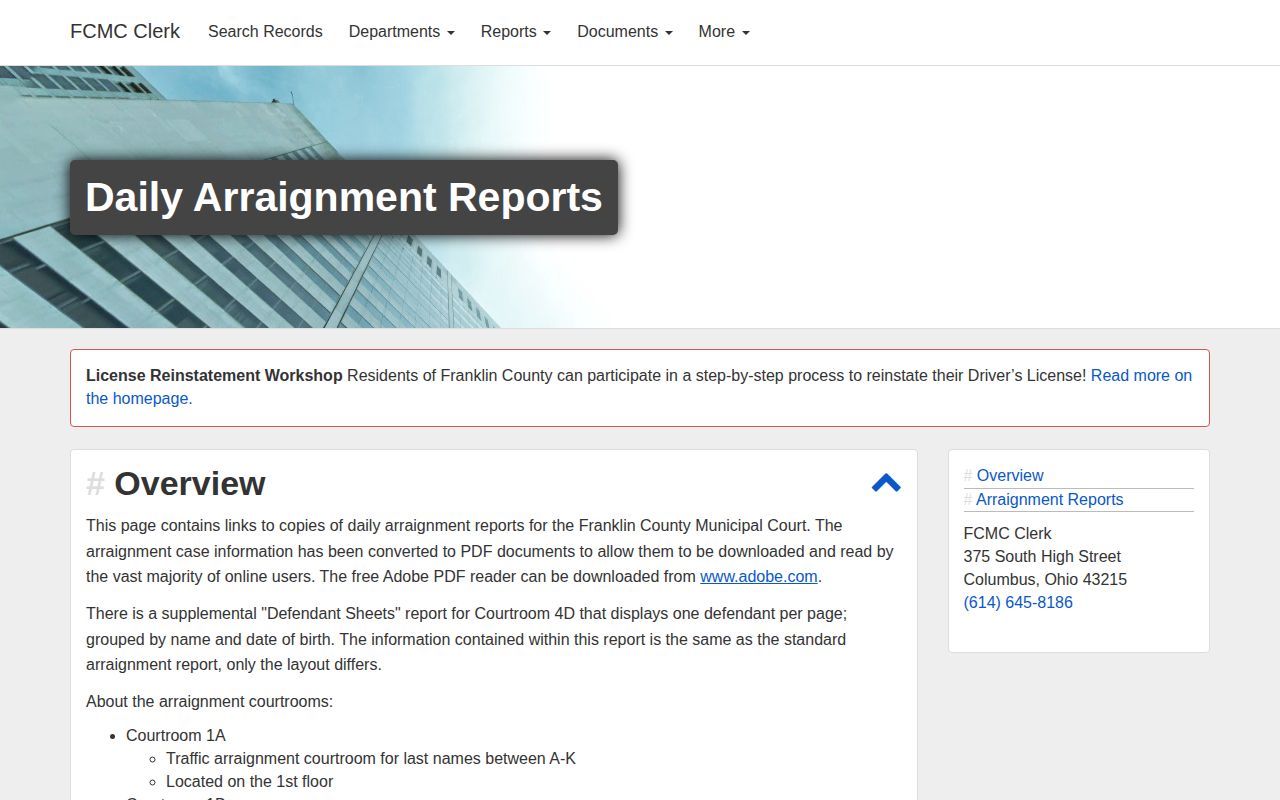
This court schedule can link a custody event to arraignment. It does not claim to list every Franklin County booking.
Franklin Weekend Arrest Searches
No FCSO source says arrests surge on weekends. None claims a set holiday posting cycle either. Staffing, processing time, court calendars, releases, and system updates can all make the picture uneven across several days. That caution stops short of any numeric delay claim.
Search each date on its own. Keep current custody separate from past custody. Someone arrested Friday may walk free before a Sunday roster check. Another may still sit in jail with a Monday court date ahead. A city citation might never touch the county jail at all. The police report and court docket close those gaps.
Franklin Arrest News Is Selective
Franklin County newsrooms are not running a booking roster. WBNS 10TV works this way. So do NBC4, ABC6/WSYX, and the Columbus Dispatch crime and courts section. Each outlet picks the arrests it covers based on news value. So local news will never match a full daily arrest log.
Reporting still helps, though. The 10TV source shows how event-driven coverage of a single Franklin County arrest can carry details a roster never would.
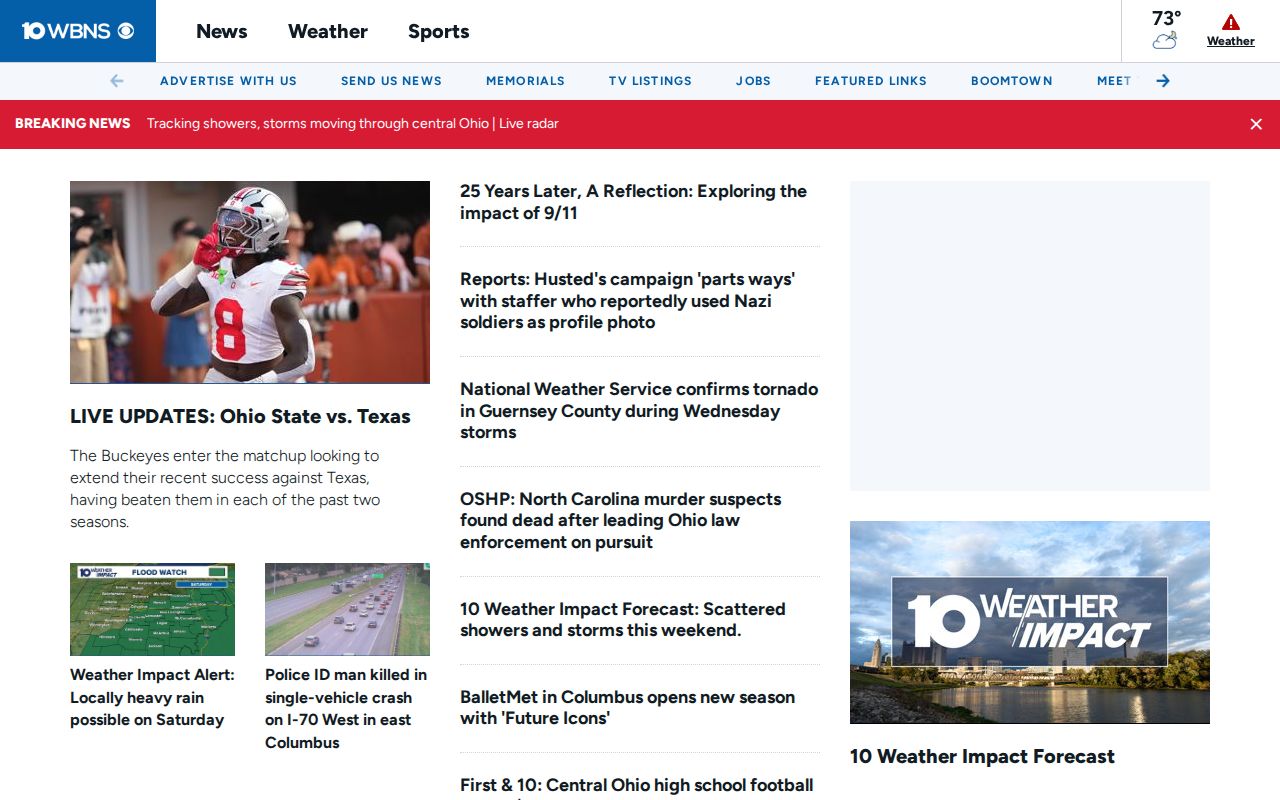
That coverage helps find reported incidents, not count bookings. Photos in a story come from agencies or news desks. They are story media, not an official archive. Check names and charges against the police agency and the court before trusting a headline.
Unofficial Franklin Booking Archives
Private indexes go deeper than the current roster. They stay secondary. Recently Booked lists names, dates, and charges. Older records can be browsed too. Mugshots.zone sorts its material by month. Their pages can run stale, duplicate names, or drift from later court outcomes. The Recently Booked Franklin County page is one such unofficial index.
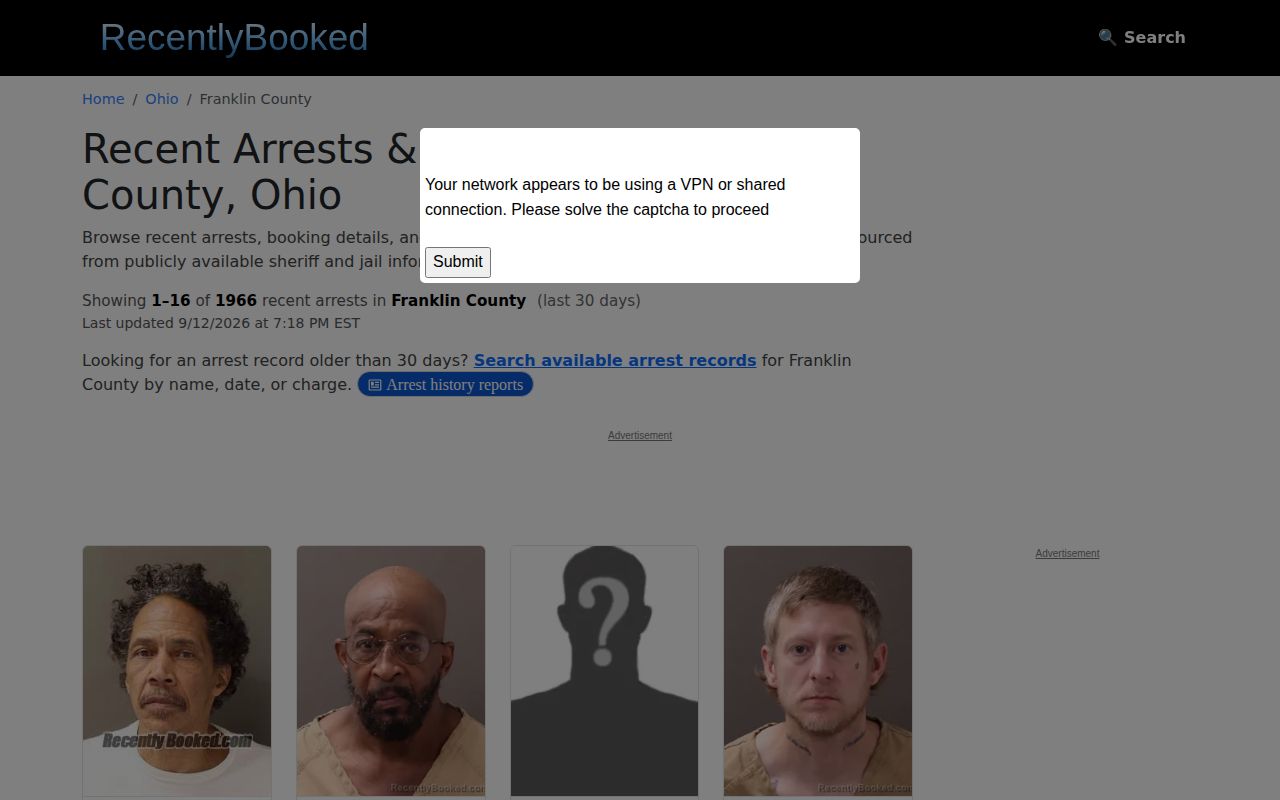
A private interface is just that. Its dates, counts, and photos never become official county records. Treat any private result as a lead. Then return to FCSO, the arresting agency, and the court. Dynamic update times are not stable facts. Archive depth says nothing about the county's legal retention schedule.
Franklin Enforcement Notices Differ
The FCSO home and news pages sometimes post public-safety notices. These concern an operation or checkpoint. A notice describes agency activity. It does not name everyone arrested or confirm any booking. It also leaves out the court result.
Keep the event notice, arrest report, booking record, and outcome separate. That chain keeps an operation-wide announcement from masquerading as a person-level log. It also explains why someone named in police news may never appear in county custody.
Note: A selected enforcement notice gives dates and agency context, but only person-specific official records establish custody and case status.
Franklin Arrest Records Past the Window
Older booking information in Franklin County does not sit in a permanent web archive. The sheriff's office posts no stated retention period for booking records or photographs. A date can fall outside the online window. Then a records request is the practical path. Contact FCSO Public Records at (614) 525-6096, or email FCSOPublicRecords@franklincountyohio.gov. Name the person, the approximate date, and the arresting agency. Say exactly what you want. A booking record, a jail-register entry, and an identification photograph are separate records. Asking for the wrong one can trigger a clarification cycle.
Ask the office which approved retention schedule applies. County schedules move through Franklin County's records process. No fixed term of years is published for sheriff booking material. Ohio Revised Code 341.02 describes the jail register itself. It calls for the name, the commitment date and cause, and the discharge date and manner. That statute gives context, not a promise of a permanent web export.
Court files live elsewhere. The appropriate clerk keeps the dockets. So an old case is a clerk question rather than a jail question. When an agency says a government record was transferred, the Ohio History Connection State Archives is the next stop. Its historic incarceration index is limited. It covers state-prison cards from 1888 through 1923, not modern Franklin County jail bookings.
For a court history, run searches in both the Franklin County Municipal Court Clerk and Common Pleas Case Information Online. The right portal depends on the offense and case level. A daily arraignment sheet can point the way. A later docket tells the fuller story, since a charge may be reduced, dismissed, transferred, or resolved. Certified copies and sealed matters may require direct contact with the clerk. Keep the distinction clear. The court record answers how a case ended. The jail record answers when and why someone entered or left county custody.
One more pointer helps. Columbus, Dublin, or Grove City police may hold the incident narrative for an arrest their officers made. That holds even when FCSO handled booking and custody. A request should name the full name, a date range, the suspected agency, and any known booking or case number. That will reach the right office faster.